

『How Does an Annubar Flow Meter Work: Averaging Pitot Tube System Design』Related information(clamp on meter|electromagnetic meter|venturi meterrotameter|orifice meter|ultrasonic flow meter|mass flow meter|coriolis mass flow meter|coriolis flow meter|magnetic flow meter|magmeter flow meter|magflow flow meter|mag meter flow meter|electromagnetic flow meter|vortex flow meter|turbine flow meter|thermal mass flow meter|thermal flow meter|rotameter flow meter)

How Does an Annubar Flow Meter Work: Averaging Pitot Tube System Design
Quick Answer: An annubar flow meter is a type of averaging pitot tube. It senses velocity pressure at multiple points across the pipe. The meter converts differential pressure into a flow rate with low permanent pressure loss.
An annubar flow meter belongs to the differential pressure flow meter family. It uses a probe inserted across the pipe diameter. The probe has multiple sensing holes on the upstream side and a downstream pressure port. These holes average the velocity pressure profile. The device therefore differs from a single point pitot tube. A single point pitot tube reads one location. An annubar reads several locations at once.
Silver Automation Instruments often recommends this flow meter for steam, gas, and clean liquid lines. Pipe sizes range from DN50 to DN1800. Accuracy is normally 0.5 percent to 1.0 percent of flow rate after calibration. Users in Southeast Asia and the Middle East select this meter for compressed air, natural gas, and boiler feedwater.
How the Averaging Pitot Tube Works
Flow hits the upstream side of the probe. The impact pressure is higher than the static pressure. The probe has multiple high pressure sensing holes. These holes are positioned at equal annular areas. This placement follows the log linear method. The downstream side has a low pressure port. The meter measures the difference between high and low pressure. A transmitter converts this differential pressure into a 4-20 mA HART signal.
Bernoulli equation links the differential pressure to flow velocity. The flow rate is proportional to the square root of the differential pressure. No moving parts exist in the probe. This is a simple and rugged system. Most units work well in pipes with Reynolds numbers above 5000.
Design Details That Matter in the Field
Not all averaging pitot tubes are the same. Probe material matters. Silver Instruments offers 316L stainless steel and Hastelloy C options. 316L works for saturated steam and air. Hastelloy C handles seawater and aggressive chemicals. Temperature limits go up to 400 degrees Celsius. Pressure ratings reach 10 MPa depending on the body and process connection.
The process connection can be flanged, threaded, or wafer style. For a DN100 steam line in a Vietnam textile plant, a flanged connection is common. For a DN80 compressed air line in a Malaysian electronics plant, a wafer style body saves space. The low pressure port location changes by model. Some probes have a single downstream port. Others have a separate static tap on the pipe wall.
ATEX Zone 1 certification is available for gas and chemical sites. We have seen operators in Saudi Arabia request ATEX and IECEx together for skid mounted gas systems. Most engineers skip this part until the site audit. We recommend checking hazardous area requirements before quote.
Annubar vs Orifice Plate and Other DP Meters
An orifice plate creates a high permanent pressure loss. An annubar has a much lower permanent pressure loss. This saves compressor energy on air lines. On a DN300 natural gas line, a typical orifice may lose 2 kPa to 4 kPa permanently. An annubar may lose less than 0.5 kPa at the same flow. That difference becomes real money on 24 hour operation.
Annubar also installs with less pipe cutting. A hot tap version can be inserted under pressure in some cases. In practice, many water and wastewater plants prefer annubar because maintenance is easier. Remove the probe, clean it, and put it back. No need to drain a long pipe section.
Common Applications and Installation Note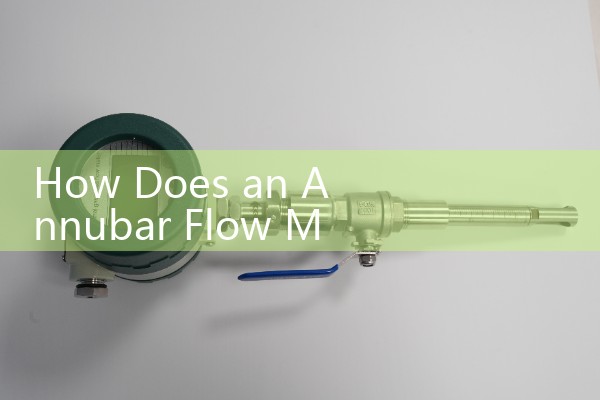
We see annubar flow meters in many industries. Steam to process reactors in Indonesia. Natural gas to boilers in Mexico. Compressed air distribution in Nigeria. Clean water flow in a desalination plant in Oman. The meter works best with dry gas, steam, and low viscosity liquids. Avoid slurries or liquids with solid particles. The sensing holes can plug if the medium is dirty.
Straight run requirements matter. The typical rule is 10 pipe diameters upstream and 5 pipe diameters downstream. More straight run is better after a pump or an elbow. For tight spaces, a flow conditioner can help. But a flow conditioner adds cost and pressure drop. Most engineers keep the annubar in long straight runs. We have seen installers forget the downstream requirement. That causes a shift in low flow readings.
Model Selection and Parameters You Need to Send
For a quote, we need specific process data. Pipe size in DN or inches. Fluid name and state. Operating pressure in bar or MPa. Temperature in degrees Celsius. Flow range in kg/h, m3/h, or Nm3/h. Viscosity in cP for liquids. Density for gas at operating conditions. Also tell us the pipe schedule or internal diameter.
A typical request reads like this. Customer asks for an annubar flow meter for superheated steam. Pipe size DN150. Pressure 12 bar. Temperature 300 degrees Celsius. Flow range 2 to 20 tonnes per hour. Output 4-20 mA HART with ATEX Zone 2. For this case, Silver Automation Instruments often recommends a 316L stainless steel probe with a flanged process connection and a HART smart differential pressure transmitter. Send these details to Silver Automation Instruments. Tel: +86-25-68650347. Whatsapp: +86-25-52155837. WeChat: +86 15365082610. We reply within 24 hours for most process data.
FAQ
How accurate is an annubar flow meter?
Accuracy is typically plus or minus 0.5 percent to 1.0 percent of rate for liquid and gas after calibration. For steam, expect around 1 percent of rate if the density compensation is correct. The transmitter accuracy and installation quality affect the final value. Use a 3 valve manifold for zero checks.
Can an annubar measure wet steam or saturated steam?
Yes. Saturated steam works well if the probe stays in the steam line. Wet steam or slug flow can damage the probe over time. Install steam traps upstream if water droplets appear. Many boiler house engineers use annubar for saturated steam at 10 to 20 bar.
What is the minimum pipe size for an annubar flow meter?
Most annubar probes suit pipe sizes from DN50 upward. Some compact models can fit DN25. Below DN25, a thermal mass flow meter or a Coriolis meter often gives better results. Fine chemicals and pilot plants sometimes ask about DN25. We review the Reynolds number before recommending a model.
How does annubar compare with vortex and electromagnetic flow meters?
For gas and steam, annubar competes with vortex flow meters. Vortex meters are better for lower pressure and high turndown. Annubar is better where low pressure loss and easy hot tap installation matter. For water and wastewater, electromagnetic flow meters dominate because they ignore conductivity changes. Use annubar for clean liquids when you already have a DP transmitter system.
Do you supply annubar flow meters for hazardous areas?
Yes. Silver Automation Instruments supplies annubar probes with ATEX Zone 1 and Zone 2 certification. The transmitter can be ATEX or IECEx certified. We also provide 4-20 mA HART output for DCS and RTU systems. Send your hazardous area classification and process gas group. We confirm the certificate before shipment.
 Hot News
 Related AD