

『How to Read Flow Meter with Ball: Single Stage Pressure Regulation Gauge Sizing Guide』Related information(clamp on meter|electromagnetic meter|venturi meterrotameter|orifice meter|ultrasonic flow meter|mass flow meter|coriolis mass flow meter|coriolis flow meter|magnetic flow meter|magmeter flow meter|magflow flow meter|mag meter flow meter|electromagnetic flow meter|vortex flow meter|turbine flow meter|thermal mass flow meter|thermal flow meter|rotameter flow meter)
How to Read Flow Meter with Ball: Single Stage Pressure Regulation Gauge Sizing Guide
Quick Answer: Read a ball type flow meter at the widest part of the floating ball. The printed scale shows flow only at one set of pressure and temperature conditions. For a single stage pressure regulation gauge, size the regulator so the valve opens between 20 percent and 80 percent at your normal flow. Send your pressure in bar, temperature in degree C, pipe size in DN, and flow range to Silver Instruments for a direct quote.
A ball flow meter is a variable area flow meter. Many engineers call it a rotameter. The ball moves up in a tapered tube when flow increases. You read the flow value from the scale printed on the tube or mounted beside the tube. The correct reading point is the widest part of the ball. Some glass tube models have a ball with a flat top. In that case read the flat edge. Do not read the center of the ball. That error can shift your measurement by 5 to 10 percent on small DN15 and DN25 meters.
We see this often on water treatment skids in Vietnam and the Philippines. A technician installs a ball flow meter for coagulant dosing and reads the top edge. The actual dose is lower than planned. Last month a customer in Ho Chi Minh City sent us a photo of a DN20 air flow meter. The ball was bouncing between 40 and 60 L/min. The cause was a single stage pressure regulator placed too close upstream. The regulator was hunting and the ball never settled.
How to Read a Ball Flow Meter for Gas and Liquid
First check the meter orientation. Variable area flow meters with a ball work only in vertical pipes. Flow must enter from the bottom and leave from the top. A horizontal installation is a common mistake. The ball will stick to the side wall and the reading will be useless.
Second identify the fluid condition. The scale on a gas rotameter is usually marked at standard conditions such as 101.325 kPa absolute and 20 degree C. If your gas runs at 3 bar gauge and 40 degree C, the actual flow will not match the scale. Use a correction formula or ask Silver Instruments to calculate the corrected scale. For liquid water at 20 degree C the scale is usually direct reading. For fluids with viscosity above 10 cP the reading shifts. Tell us your viscosity in cP when you request a quote.
Third inspect the ball material. Glass tube flow meters often use a ball made from 316 stainless steel, PTFE, or ceramic. The ball density affects the scale. If you replace a stainless steel ball with a PTFE ball, the same float height gives a different flow. Always keep the original ball material. Buy spare balls from the original manufacturer to avoid a hidden calibration shift.
Single Stage Pressure Regulation Gauge Sizing Guide
A single stage pressure regulator controls downstream pressure by opening and closing a valve. The gauge on the regulator shows the downstream pressure. Many people call this a pressure reducing valve. Sizing is not just matching the pipe size. You must calculate the required Cv or Kv value. The Cv formula is simple. Cv equals flow divided by the square root of the pressure drop. Use flow in US gallons per minute and pressure drop in psi. Use Kv for flow in m3/h and pressure drop in bar.
Here is a real example. A paint manufacturer in Southeast Asia needed compressed air at 4 bar downstream from a 10 bar header. The flow range was 20 to 60 Nm3/h. The pipe size was DN25. We calculated the required Cv at 60 Nm3/h. The result was 1.2. We proposed a single stage regulator with a Cv of 2.0. This means the valve travels at 60 percent of maximum opening at full flow. That is a good operating point. If we installed a Cv 8.0 regulator, the valve would open only 15 percent. The control would be unstable and the gauge needle would vibrate.
Most engineers skip the Cv check. They choose a regulator with the same connection size as the pipe. That works sometimes. But in small to medium flow systems the oversized regulator is a common fault. We have replaced many oversized units on gas sampling panels in Nigeria and Indonesia. The symptoms are the same. The downstream gauge swings, the ball flow meter bounces, and the system pressure creeps at low flow.
For a single stage regulator, keep the
Integrating a Ball Flow Meter and a Pressure Regulator
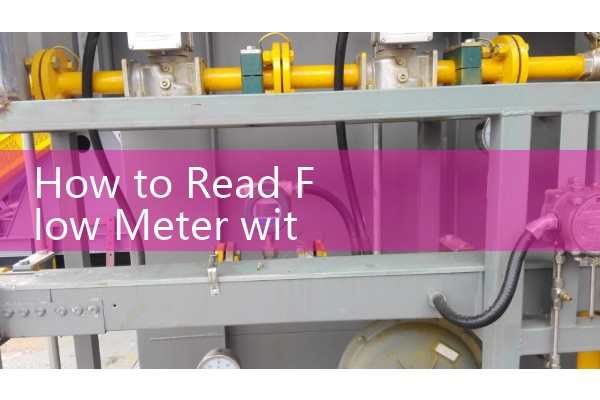
Install the ball flow meter downstream of the regulator when possible. The flow meter then sees a stable pressure. This gives you a steady ball position and a readable scale. If the meter is upstream of the regulator, the ball may bounce because the regulator valve opens and closes. In many gas feed systems the correct order is pressure regulator, then ball flow meter, then needle valve, then the process. The needle valve gives fine flow adjustment. The ball flow meter gives you a visual check. The regulator keeps the inlet pressure to the needle valve constant.
Allow at least 5 pipe diameters of straight run after a regulator before the flow meter. This is not a strict requirement for a rotameter but it helps. The flow profile after a regulator is disturbed. A short pipe of 5 to 10 DN helps the flow reattach. In tight panels you can reduce this to 3 DN if the meter is low accuracy class. For a 4 percent accuracy meter we recommend 5 DN minimum.
Check the material compatibility. A single stage regulator for oxygen service must be cleaned for oxygen. Do not use a standard industrial air regulator for oxygen. Silver Instruments supplies oxygen cleaned regulators with 316L body and PTFE seat. For corrosive gas such as chlorine or sulfur dioxide, use a Hastelloy C trim. For food and beverage air or CO2 service, use a regulator with FDA approved elastomers. The ball flow meter wetted parts must also match the fluid.
Pressure gauges on the regulator should be chosen for the pressure range. A 0 to 10 bar gauge on a 0.5 bar service reads poorly. Use a 0 to 1 bar gauge or a 0 to 1.6 bar gauge. Liquid filled gauges help when the regulator is mounted near a pump or compressor. The liquid dampens the needle movement. For ATEX Zone 1 areas, use an explosion proof transmitter instead of a mechanical gauge. A 4 to 20 mA HART pressure transmitter gives remote signal and local safety.
FAQ
1. Can a ball flow meter be mounted horizontally?
No. A ball flow meter also called a rotameter must be vertical. Flow enters from the bottom and exits from the top. Horizontal mounting causes the ball to drag against the tube wall and gives a false reading.
2. Do I need to correct gas flow meter readings for pressure and temperature?
Yes. The scale is valid only at the marked conditions. Higher pressure increases gas density. Higher temperature decreases density. Silver Instruments can provide a corrected scale or a calibration certificate for your actual process conditions.
3. How do I choose between a single stage and two stage pressure regulator?
Use a single stage regulator when the inlet to outlet pressure ratio is under 10 to 1 and your flow does not swing more than 30 percent. Use a two stage regulator when the pressure ratio is higher or the downstream pressure must stay within a narrow band.
4. What happens if my pressure regulator is oversized?
The valve operates near the seat at low opening. The flow becomes unstable. You will see the gauge needle vibrate and the ball flow meter bounce. A ball bouncing more than 10 percent of scale is a common sign of an oversized regulator or pressure instability.
5. Can I use the same ball flow meter for liquid and gas?
No. A gas meter and a liquid meter have different scales and ball materials. Using a gas meter with water will give a wrong reading. Tell Silver Instruments the fluid type, flow range, pressure, temperature, and pipe size so we can recommend the correct meter.
Silver Automation Instruments supplies ball type variable area flow meters, single stage pressure regulation gauges, and complete flow metering packages. Send your pressure in bar, temperature in degree C, pipe size in DN, and flow range. Tel: +86-25-68650347. Whatsapp: +86-25-52155837. WeChat: +86 15365082610.
 Hot News
 Related AD