

『How Does Thermal Mass Flow Meter Work: Thermodynamic Heat Transfer Principles』Related information(clamp on meter|electromagnetic meter|venturi meterrotameter|orifice meter|ultrasonic flow meter|mass flow meter|coriolis mass flow meter|coriolis flow meter|magnetic flow meter|magmeter flow meter|magflow flow meter|mag meter flow meter|electromagnetic flow meter|vortex flow meter|turbine flow meter|thermal mass flow meter|thermal flow meter|rotameter flow meter)
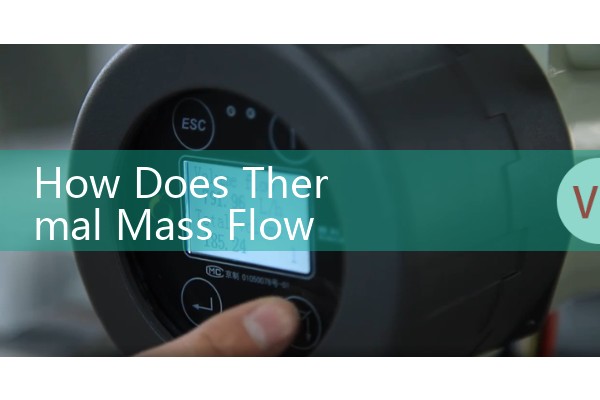
How Does a Thermal Mass Flow Meter Work? Thermodynamic Heat Transfer Principles
Quick Answer: A thermal mass flow meter measures gas mass flow by reading heat loss from a heated sensor. The gas molecules carry heat away from the sensor surface. The meter converts that heat transfer into a mass flow signal in kg/h or Nm3/h with no separate pressure or temperature compensation.
The Core Thermodynamic Principle
A thermal mass flow meter relies on convective heat transfer. The sensor body includes two PT100 RTD elements. One element is heated. The other element reads the gas temperature. Gas flows across both elements. The moving gas strips heat from the heated surface. The amount of heat lost depends on the number of gas molecules hitting the sensor. That number is mass flow.
Here is the thing. Volume flow changes when pressure and temperature change. But mass flow stays the same. Because gas molecules are the heat carriers, the thermal principle reads mass flow directly.
Most engineers skip the heat transfer coefficient math. The key point is simple. More mass flow removes more heat. Less mass flow removes less heat. The transmitter electronics measure that change and output a linear mass flow signal.
Two Operating Methods
The constant temperature differential method holds a fixed temperature gap between the heated sensor and the reference sensor. The meter adjusts heater power to maintain that gap. High mass flow needs more heater power. The power level becomes the flow signal. This method gives fast response and a wide turndown ratio. It works well for compressed air, nitrogen, and natural gas.
The constant power method sends a fixed amount of energy to the heater. The temperature difference between the heated sensor and the reference sensor changes with flow. Low flow gives a large temperature gap. High flow gives a small gap. This method suits low flow ranges and some dirty gas applications.
Silver Instruments TMF series uses the constant temperature differential method as standard. Some TMF80 insertion models can be set for constant power mode in the field.
Why Mass Flow Instead of Volume Flow
Many plants still measure compressed air in m3/h. That number shifts with temperature and pressure. A thermal mass flow meter reports kg/h or Nm3/h directly. This removes the need for a separate flow computer, pressure transmitter, and temperature transmitter on many gas lines.
In practice, this matters on a 7 bar compressed air header. A volumetric meter may show 200 m3/h at 20 °C. The same mass flow at 45 °C may show a different volume. The thermal meter keeps the mass reading stable because it senses the heat carried by the gas molecules.
Typical Installation and Pipe Size Range
Inline thermal mass flow meters fit DN15 to DN100. Insertion thermal mass flow meters fit DN50 to DN3000 ducts and stacks. We see many customers use inline meters on nitrogen blanketing lines and burner gas lines. Insertion probes suit biogas, flue gas, and aeration air.<
For a DN25 air line at 6 bar with a flow range of 5 to 180 kg/h, we often quote the Silver Instruments TMF25 inline meter. For a large exhaust duct at DN800 running 0.5 to 10 m/s, we recommend the TMF80 insertion probe.
Output Signal and Integration
Silver Instruments thermal mass flow meters provide 4 to 20 mA HART output as standard. Modbus RTU RS485 is an option. The 4 to 20 mA signal maps directly to mass flow units. Wiring into a PLC or SCADA system is straightforward.
The transmitter can also show totalized flow. This helps with plant energy balances and compressed air audits.
Accuracy, Turndown, and Calibration
Silver Instruments TMF series has typical accuracy of plus or minus 1 percent of reading plus 0.5 percent of full scale. Turndown can reach 100 to 1. Calibration uses actual gas or an air equivalence method. Some customers ask for methane or carbon dioxide calibration. We ask for gas composition because thermal properties differ by gas type.
A paint manufacturer in Vietnam uses a TMF25 on a 50 mm solvent vapor line. A water utility in Queensland monitors biogas from a digester with a TMF80 insertion probe. The gas line runs at 35 °C and 0.2 bar. The meter sends 4 to 20 mA HART to a SCADA system. These are direct mass flow jobs with no extra compensation devices.
FAQ
Can a thermal mass flow meter measure liquids?
Thermal mass flow meters are mostly used for gas. Some special designs handle liquids, but the Silver Instruments TMF series is for gas. For liquid mass flow, we recommend a Coriolis mass flow meter.
What is the difference between inline and insertion thermal mass flow meters?
Inline meters include a pipe section from DN15 to DN100. Insertion probes insert through a ball valve into a pipe or duct from DN50 to DN3000. Inline meters suit small lines and higher accuracy. Insertion probes suit large ducts and lower installed cost.
Does a thermal mass flow meter need pressure and temperature compensation?
No. The thermal sensor measures mass velocity directly. The transmitter converts that to kg/h or Nm3/h. You do not need a separate flow computer for gas mass flow.
What output signal does the Silver Instruments TMF series offer?
Standard output is 4 to 20 mA HART. Optional Modbus RTU RS485 is available. Both signals can be wired to a PLC, DCS, or SCADA.
Can the device handle hazardous area gas lines?
Yes. We supply options for ATEX Zone 1 and IECEx. The sensor can be 316L stainless steel with PT100 RTD elements. Tell us the gas group, temperature class, and zone classification when you send the RFQ.
Request a Quote from Silver Instruments
Send us your gas composition, flow range in kg/h, pipe size in DN, pressure in bar, and temperature in °C. Tell us if the area is hazardous. Our engineers will reply with model, price, and lead time.
Silver Automation Instruments
Tel: +86-25-68650347
Whatsapp: +86-25-52155837
WeChat: +86 15365082610
 Hot Blog
 Related AD