

 Current position > News detail
『Agilent GC Flow Meter: Sourcing Cleanroom Bench Carrier Gas Controllers』Related information(clamp on meter|electromagnetic meter|venturi meterrotameter|orifice meter|ultrasonic flow meter|mass flow meter|coriolis mass flow meter|coriolis flow meter|magnetic flow meter|magmeter flow meter|magflow flow meter|mag meter flow meter|electromagnetic flow meter|vortex flow meter|turbine flow meter|thermal mass flow meter|thermal flow meter|rotameter flow meter)
Agilent GC Flow Meter: Sourcing Cleanroom Bench Carrier Gas Controllers
Quick Answer: For cleanroom bench carrier gas control, use a thermal mass flow controller, not a volumetric rotameter. It should have metal wetted parts, low leak fittings, and direct mass flow output such as 4-20 mA HART or RS485 Modbus. Silver Automation Instruments supplies helium, nitrogen, argon, and hydrogen mass flow controllers from 0 to 10 sccm up to 0 to 50 slm.
What a Cleanroom Bench Carrier Gas Controller Does
Carrier gas moves from a cylinder or house line into the GC inlet. The bench controller holds that flow steady. If flow drifts, retention times shift. In a cleanroom, small leaks are hard to see but easy to detect with a helium leak check. Most engineers skip cheap rotameters for this job. They do not correct for pressure or temperature. A thermal mass flow controller reads molecular flow directly.
Original Agilent GC systems use internal electronic pneumatics control, often called EPC. The EPC module sets pressure and flow based on the GC method. A standalone cleanroom bench carrier gas controller is still useful for custom GC systems, gas blending panels, headspace samplers, and flow verification.
Agilent GC Flow Meter Sourcing: OEM vs Standalone Devices
Buyers often ask us if a generic flow meter can verify an Agilent GC flow. The answer is yes for external verification, but you must match the gas type and the pressure range. Agilent GC flow meter parts from the OEM channel can be expensive. Lead times in Southeast Asia and the Middle East sometimes reach 10 to 14 weeks. A standalone thermal mass flow meter calibrated for the same gas works as a reference device.
We have seen this on customer sites many times. A distributor in Thailand ordered an Agilent GC flow meter replacement and waited 12 weeks. A local lab used one of our 0 to 100 sccm helium mass flow controllers as a temporary reference. The baseline stabilized within two days.
Critical Specifications for Cleanroom Bench Carrier Gas Controllers
Specify gas type first. Helium, nitrogen, argon, hydrogen, and 5 percent hydrogen in nitrogen are common for GC. Each gas has a different thermal conductivity and specific heat. A mass flow controller calibrated for nitrogen will not read helium correctly unless it has a gas correction factor.
Flow range depends on the column and inlet. Capillary columns typically use 0 to 100 sccm or 0 to 200 sccm. Packed columns may need 0 to 5 slm or 0 to 50 slm. Do not oversize the controller. If you run 20 sccm on a 0 to 500 sccm device, the error can be large at the low end.
Wetted materials should be 316L stainless steel or Hastelloy C-22 for clean gas lines. Seals can be Viton, PTFE, or metal. For cleanroom bench carrier gas controllers, a metal seal is better because it sheds fewer particles. Fittings are usually 1/4 inch VCR male, 1/8 inch compression, or 3 mm compression.
Output options include 4-20 mA HART, RS485 Modbus RTU, and 0 to 5 VDC. Most cleanroom labs in Vietnam, Malaysia, and the Philippines prefer 4-20 mA HART because it works with existing PLC and SCADA wiring. Pressure rating of 10 bar covers most carrier gas lines. Leak rate should be lower than 1 x 10^-9 mbar L/s for helium.
Why 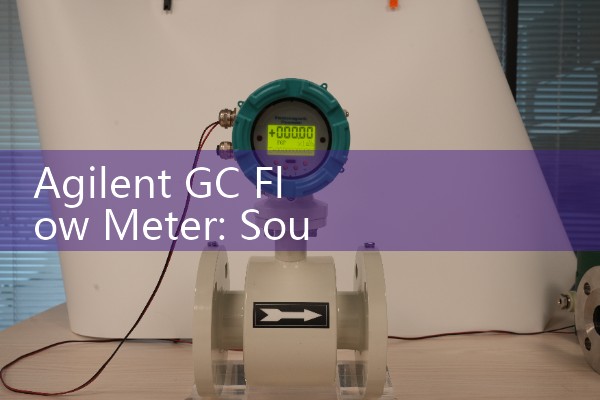
Here is the thing. A volumetric rotameter reads flow at line pressure and temperature. A thermal mass flow meter reads mass flow directly. In practice, the difference can be 5 to 15 percent on helium. That is enough to shift retention times. Cleanroom benches also need low particle generation and low leak rates. Glass tube rotameters do not meet that requirement.
Some labs still use a rotameter on the vent line or purge line. That is acceptable for rough flow. But for carrier gas into a GC inlet, use a mass flow device.
Silver Automation Instruments Options for Carrier Gas Flow
Silver Automation Instruments supplies thermal mass flow meters and controllers for clean gas lines. Common ranges include 0 to 10 sccm, 0 to 50 sccm, 0 to 100 sccm, 0 to 500 sccm, 0 to 5 slm, and 0 to 50 slm. The body is 316L stainless steel. Accuracy is typically +/- 1 percent of full scale, with better accuracy available for low flow ranges. Outputs include 4-20 mA HART and RS485 Modbus RTU. Power is 24 VDC. You can see the product range at flow-meter.com.au.
For cleanroom bench carrier gas controllers, we recommend a normally closed valve. This prevents gas flow if power fails. It also protects the GC column from pressure surges. We can supply metal seals for hydrogen and helium service. A paint manufacturer in Southeast Asia used our 0 to 100 sccm nitrogen mass flow controller for a GC-FID in a solvent analysis bench. The unit was installed in an ISO Class 6 cleanroom.
How to Send a Quote Request That Gets a Fast Reply
Most engineers skip this part. They send an email that asks for a flow meter without details. That does not help. For a cleanroom bench carrier gas controller, we need six values. Gas type, flow range in sccm or slm, inlet pressure in bar, outlet pressure in bar, fitting size, and signal type. If you have a cleanroom class and temperature range, add that too.
Send your gas type, flow range, pressure, temperature, fitting size, and control signal to Silver Automation Instruments. Tel: +86-25-68650347. WhatsApp: +86-25-52155837. WeChat: +86 15365082610.
FAQ
Can a thermal mass flow meter replace an Agilent GC flow meter?
Yes for external verification and custom gas panels. It cannot replace the internal EPC module of an Agilent GC because the GC firmware controls that module.
What flow range do I need for carrier gas?
Most capillary GC carrier gas lines run from 0 to 100 sccm or 0 to 200 sccm. Packed columns may need up to 50 slm. Specify your column and inlet type.
Which fittings are common for cleanroom bench carrier gas controllers?
1/4 inch VCR male, 1/8 inch compression, and 3 mm compression are common. VCR metal gasket fittings give lower leak rates.
Do you supply controllers for hydrogen carrier gas?
Yes. Use 316L stainless steel or Hastelloy C-22 wetted parts, metal seals, and a normally closed valve. We can supply hydrogen compatible calibration.
What is the lead time for a standard cleanroom bench carrier gas controller?
Standard range thermal mass flow controllers ship in 10 to 15 working days. Custom ranges or special fittings may take 4 to 6 weeks. Contact us with your parameters.